
Customer Loyalty Programs: Why They Fail to Drive Growth
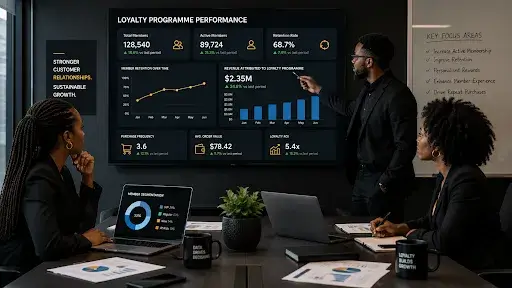
For many businesses, customer loyalty programmes appear to offer a straightforward path to sustainable growth. Reward customers for repeat purchases, encourage ongoing engagement, and strengthen long-term relationships. The concept is simple, and in theory, everyone benefits.
Yet despite significant investment in points systems, discounts, exclusive offers, membership schemes, and rewards platforms, many organisations struggle to demonstrate a meaningful commercial impact. Customers join loyalty programmes but remain inactive. Repeat purchase rates improve only marginally. Revenue growth fails to meet expectations, and businesses begin questioning whether their investment is generating measurable returns.
The problem is rarely that loyalty programmes are ineffective by design. More often, they fail because they focus on encouraging transactions rather than strengthening customer relationships. Many programmes reward behaviour that customers were already likely to demonstrate, while doing very little to influence long-term loyalty, customer advocacy, or lifetime value.
In increasingly competitive markets, genuine customer loyalty cannot be purchased through discounts alone. Customers remain loyal because organisations consistently deliver value, solve meaningful problems, provide excellent experiences, and earn trust over time.
This article explores why many customer loyalty programmes fail to improve revenue, the common mistakes organisations make when designing retention strategies, and the approaches that create stronger customer relationships while supporting sustainable business growth.
Loyalty Is Earned Through Value, Not Rewards
Many organisations treat loyalty programmes as the primary driver of customer retention. In reality, loyalty programmes should reinforce loyalty that already exists rather than attempt to create it from nothing.
Customers do not remain loyal simply because they receive points after making a purchase. They remain loyal because they consistently receive value that exceeds their expectations.
If the product disappoints, customer service is inconsistent, delivery is unreliable, or communication feels impersonal, no amount of rewards will compensate for a poor overall experience.
Customers evaluate every interaction they have with a business. The purchasing experience, onboarding process, support quality, responsiveness, product reliability, and ongoing communication all contribute to whether they choose to return.
Rewards can encourage repeat purchases in the short term, but lasting loyalty is built through consistently positive customer experiences that make switching to competitors feel unnecessary.
Organisations that understand this distinction invest first in delivering exceptional customer value before introducing programmes designed to reinforce existing relationships.
Discount-Based Programmes Often Reduce Profitability Without Building Loyalty
One of the most common mistakes businesses make is confusing customer loyalty with customer dependence on discounts.
Many loyalty programmes revolve around financial incentives. Customers receive discounts, cashback, promotional vouchers, or special pricing after reaching certain spending thresholds.
While these incentives may temporarily increase purchasing activity, they often fail to create genuine loyalty.
Instead, they condition customers to delay purchases until discounts become available.
Over time, businesses find themselves offering increasingly generous incentives simply to maintain customer engagement. Margins decline while customers become more price-sensitive rather than more loyal.
Competitors can easily replicate these offers, creating a cycle where businesses compete primarily on promotional value instead of delivering differentiated customer experiences.
True loyalty exists when customers continue choosing a business even when cheaper alternatives are available because they trust the organisation to consistently deliver superior value.
Loyalty Programmes Often Reward Existing Behaviour Instead of Changing It
Many loyalty initiatives reward customers for actions they would have taken regardless.
Customers who already purchase regularly accumulate points, unlock higher membership tiers, and receive exclusive benefits. While these customers appreciate the rewards, the programme itself often has very little influence on their purchasing behaviour.
Meanwhile, customers who are less engaged remain inactive because the programme fails to address the reasons they stopped purchasing in the first place.
This creates a situation where businesses invest heavily in rewarding their most loyal customers without significantly increasing retention among customers who are most at risk of leaving.
Effective loyalty strategies focus on influencing behaviour rather than simply recognising it. They identify opportunities to improve customer engagement, encourage greater product adoption, strengthen relationships, and increase overall customer lifetime value.
Programmes should motivate meaningful behavioural change rather than simply acknowledging existing purchasing habits.
Customer Experience Has Greater Influence Than Incentives
Many businesses underestimate the extent to which customer experience influences loyalty.
Customers remember how businesses make them feel. They remember whether problems were resolved quickly, whether communication was clear, whether employees understood their needs, and whether interactions felt effortless.
Positive experiences build emotional confidence that extends beyond individual transactions.
Poor experiences, however, create friction that even generous reward programmes struggle to overcome.
Businesses frequently invest substantial budgets in loyalty technology while overlooking the operational improvements that would have a far greater impact on customer retention.
Reducing response times, simplifying customer journeys, improving onboarding, providing proactive communication, and empowering customer support teams often generate stronger loyalty than offering additional discounts.
The most successful organisations recognise that customer experience is itself one of the most powerful loyalty programmes available.
Personalisation Strengthens Relationships More Than Generic Rewards
Modern customers increasingly expect businesses to understand their individual preferences, behaviours, and needs.
Generic rewards programmes often provide identical incentives to every customer regardless of purchasing history, interests, or relationship with the organisation.
This approach overlooks one of the greatest opportunities available to modern marketers.
Personalised communication demonstrates that a business understands its customers. Relevant recommendations, tailored offers, proactive support, educational content, and timely engagement create experiences that feel significantly more valuable than generic reward structures.
Customers are far more likely to remain loyal when interactions consistently reflect their specific circumstances rather than broad customer segments.
Organisations that leverage customer data responsibly to personalise experiences often achieve stronger retention while improving customer satisfaction and lifetime value.
Personalisation transforms loyalty from a transactional programme into an ongoing relationship.
Measuring Loyalty Requires Looking Beyond Repeat Purchases
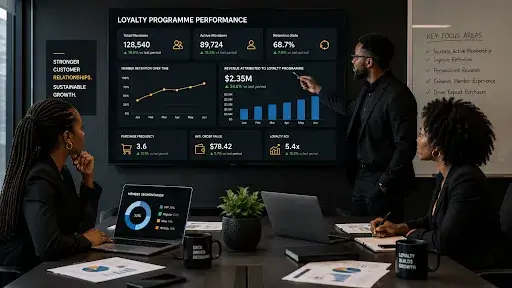
Many organisations judge the success of loyalty programmes by measuring repeat purchase rates alone.
While repeat purchases are important, they provide only part of the picture.
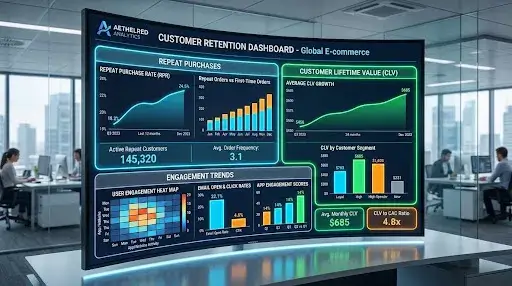
True customer loyalty also influences customer lifetime value, average order value, referral activity, advocacy, retention rates, engagement levels, and overall profitability.
A customer who purchases frequently while demanding constant discounts may generate less long-term value than a customer who purchases less often but consistently recommends the business to others and remains loyal for many years.
Businesses should therefore evaluate loyalty using broader commercial metrics rather than relying solely on programme participation or redemption rates.
This provides a more accurate understanding of whether customer relationships are genuinely strengthening or whether promotional activity is simply encouraging short-term purchasing behaviour.
Strong measurement enables organisations to optimise loyalty investments around sustainable business outcomes rather than superficial engagement metrics.
Organisational Alignment Creates Stronger Customer Loyalty
One of the less visible reasons loyalty programmes underperform is that customer loyalty is often treated as the responsibility of a single department.
Marketing designs the programme. Customer service handles enquiries. Sales focuses on acquiring new customers. Product teams prioritise development. Leadership reviews commercial performance.
Without alignment, customers receive inconsistent experiences throughout their relationship with the business.
Loyalty is strengthened when every department contributes to delivering a consistent customer experience.
Marketing communicates realistic expectations. Sales attracts customers who are genuinely suited to the organisation’s offering. Customer success reinforces value after purchase. Support resolves issues efficiently. Leadership ensures customer satisfaction remains a strategic priority across the organisation.
When customer loyalty becomes a shared organisational objective rather than an isolated marketing initiative, businesses create stronger relationships that naturally improve retention and revenue.
What Builds Customer Loyalty That Drives Revenue
Developing loyalty strategies that produce measurable commercial results begins with understanding why customers remain loyal in the first place.
Businesses should first identify the moments throughout the customer journey that have the greatest influence on satisfaction and long-term retention. These moments should be continuously improved through customer feedback, operational excellence, and ongoing optimisation.
Loyalty programmes should complement these experiences rather than replace them. Rewards should recognise valuable behaviours, encourage deeper engagement, and strengthen relationships instead of relying exclusively on financial incentives.
Personalisation should guide customer communication, ensuring interactions remain relevant and valuable throughout the relationship.
Organisations should also invest in measuring customer lifetime value, retention, advocacy, and satisfaction alongside traditional revenue metrics. These insights help identify opportunities to improve loyalty before customers disengage.
Finally, businesses should view customer loyalty as a long-term growth strategy rather than a short-term promotional tactic. Sustainable loyalty develops gradually through consistent value creation, trust, and meaningful customer experiences.
Conclusion
Many customer loyalty programmes fail to move the revenue needle because they focus too heavily on rewards while overlooking the factors that genuinely influence customer behaviour. Discounts, points, and promotional incentives may encourage occasional repeat purchases, but they rarely create the trust, satisfaction, and emotional connection required for lasting customer relationships.
The organisations that consistently outperform competitors understand that loyalty is built through exceptional customer experiences, clear value propositions, personalised engagement, and consistent delivery across every stage of the customer journey. When these elements work together, customers remain longer, spend more, recommend the business to others, and contribute significantly greater lifetime value.
At Intense Digital, we help organisations build customer retention strategies that go beyond traditional loyalty programmes by combining customer insights, data-driven marketing, journey optimisation, and performance measurement. Our approach ensures that every customer interaction strengthens relationships while contributing to measurable business growth.
If your loyalty programme is generating activity but failing to deliver meaningful revenue growth, it may be time to rethink your customer retention strategy. Book a free consultation with Intense Digital today and discover how building stronger customer relationships can become one of your most valuable competitive advantages.