
The Rising Cost of Customer Acquisition: Causes and Solutions

Acquiring new customers has become significantly more challenging than it was just a few years ago. Across industries, businesses are spending more on advertising, investing in additional marketing channels, and producing greater volumes of content, yet many are finding that the cost of generating each new customer continues to rise.
For some organisations, this increase appears gradual. For others, it has become one of the biggest threats to profitability. Campaigns that once delivered strong returns now produce fewer qualified leads, paid media budgets need constant increases to maintain performance, and customer acquisition costs continue climbing despite greater marketing activity.
The issue is rarely the result of a single factor. Instead, customer acquisition costs increase because multiple changes are happening simultaneously. Competition has intensified, customer expectations have evolved, digital advertising has become more expensive, and buying decisions now involve longer and more complex customer journeys.
Many organisations respond by increasing their marketing spend, believing that greater investment alone will solve the problem. While additional budget may create more visibility, it does not necessarily improve efficiency. Without addressing the underlying causes of rising acquisition costs, businesses often spend more while achieving only marginal improvements in performance.
Customer acquisition should not simply be viewed as a marketing expense. It is one of the most important commercial metrics influencing profitability, growth, and long-term competitiveness.
This article explores why customer acquisition continues to become more expensive, the hidden factors driving these increases, and the practical strategies businesses can implement to improve acquisition efficiency while supporting sustainable growth.
Customer Acquisition Costs Reflect More Than Advertising Spend
Many businesses calculate customer acquisition cost by dividing marketing spend by the number of customers acquired. While this provides a useful benchmark, it often oversimplifies what is happening beneath the surface.
Customer acquisition is influenced by every stage of the buying journey. Advertising costs, website experience, brand positioning, messaging clarity, lead nurturing, sales effectiveness, and customer trust all contribute to how efficiently prospects become paying customers.
When any one of these areas underperforms, acquisition costs increase because more resources are required to generate the same outcome.
For example, businesses with unclear messaging often attract visitors who are not ideal customers. Poor website experiences reduce conversion rates even when advertising performs well. Weak sales processes allow qualified opportunities to disappear before becoming customers. These inefficiencies compound, making acquisition progressively more expensive.
Organisations that consistently achieve lower acquisition costs understand that marketing efficiency extends far beyond media buying. Every customer interaction either reduces or increases the effort required to convert prospects into customers.
Increased Competition Has Raised the Cost of Attention
Digital marketing has lowered the barriers to entry for businesses across almost every industry. Organisations of every size can now advertise on search engines, social media platforms, streaming services, and countless digital channels.
While this has created more opportunities for businesses, it has also created unprecedented competition for customer attention.
Consumers now encounter thousands of marketing messages every day. As more organisations compete for the same audiences, advertising platforms become more competitive, increasing the cost of impressions, clicks, and conversions.
Businesses are no longer competing solely with organisations in their own industry. Every advertisement, piece of content, email campaign, and promotional offer competes for the same limited attention span.
Simply increasing advertising budgets rarely provides a sustainable advantage. Businesses that succeed in highly competitive markets focus on increasing the quality and relevance of their communication rather than relying solely on greater spend.
Attention has become one of the world’s most valuable commercial resources, and earning it requires increasingly strategic marketing.
Modern Customers Take Longer to Make Decisions
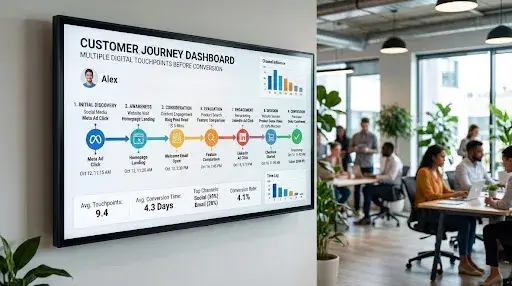
Customer acquisition has become more expensive partly because buying behaviour has changed.
Customers rarely make purchasing decisions after a single interaction. Instead, they research products, compare alternatives, read reviews, explore websites, engage with content, speak with colleagues, and evaluate multiple providers before committing to a purchase.
Business-to-business buying journeys are often even more complex, involving multiple decision-makers with different priorities and concerns.
This extended evaluation process means organisations must invest in nurturing prospects across several touchpoints before generating revenue. Marketing is no longer responsible only for creating awareness. It must also educate, build credibility, address objections, and reinforce trust throughout the buying journey.
Businesses that fail to support customers during these stages often lose opportunities to competitors who communicate more consistently and provide greater confidence throughout the decision-making process.
Longer buying journeys increase acquisition costs because more marketing effort is required before customers are ready to purchase.
Poor Conversion Rates Make Every Lead More Expensive
Many organisations focus heavily on generating traffic while paying relatively little attention to converting visitors into customers.
This creates a significant efficiency problem.
If only a small percentage of website visitors become qualified leads or customers, acquisition costs naturally increase because more advertising spend is required to generate each successful conversion.
Conversion challenges often result from unclear messaging, complicated user experiences, weak calls to action, slow websites, lengthy forms, or offers that fail to address customer priorities.
Improving conversion rates is frequently one of the fastest ways to reduce acquisition costs because existing marketing investment produces greater commercial value.
Rather than continually increasing budgets, businesses should examine how effectively current visitors move through the customer journey and identify opportunities to remove unnecessary friction.
Small improvements in conversion performance can significantly improve overall marketing efficiency.
Weak Brand Positioning Forces Businesses to Compete on Price
One of the hidden drivers of rising acquisition costs is poor differentiation.
When customers struggle to understand why one business is different from another, purchasing decisions increasingly revolve around price.
Price competition attracts less committed buyers, encourages discounting, and reduces profitability. It also increases acquisition costs because organisations must continually replace customers who leave for lower-priced alternatives.
Strong brands reduce acquisition costs by creating preference before customers even enter the buying process.
Businesses with clear positioning, distinctive messaging, and recognised expertise often attract higher-quality prospects who require less persuasion because they already understand the organisation’s value.
Differentiation therefore improves both marketing efficiency and customer quality while reducing reliance on constant promotional activity.
Customer Retention Directly Influences Acquisition Efficiency

Many organisations evaluate acquisition without considering retention.
Acquiring customers becomes significantly more expensive when businesses fail to retain existing ones. Every lost customer must be replaced, requiring additional marketing investment simply to maintain current revenue levels.
Retention also influences customer lifetime value, which determines how much businesses can profitably invest in acquisition.
Organisations with strong retention can afford higher acquisition costs because customers generate value over longer periods. Businesses with poor retention experience the opposite effect. Acquisition becomes increasingly difficult because customers leave before generating sufficient long-term revenue.
Improving retention therefore reduces pressure on acquisition while increasing overall marketing profitability.
Businesses that invest in customer experience, onboarding, ongoing communication, and long-term relationship building frequently discover that improving retention has a direct positive impact on acquisition performance.
Better Data Creates More Efficient Acquisition
Many businesses continue making acquisition decisions using incomplete or disconnected performance data.
Marketing teams optimise campaigns based on clicks and impressions. Sales teams focus on closed deals. Leadership reviews revenue performance. Yet these insights often exist in separate systems with limited visibility across the entire customer journey.
Without integrated performance data, organisations struggle to identify which marketing activities actually generate profitable customers.
Clear measurement allows businesses to understand which channels attract the highest-quality leads, which campaigns generate long-term customer value, and where acquisition budgets deliver the strongest commercial returns.
Data-driven optimisation enables organisations to eliminate inefficient activities while increasing investment in strategies that consistently deliver measurable business outcomes.
Customer acquisition becomes more affordable when every marketing decision is informed by reliable performance insights rather than assumptions.
How to Reduce Customer Acquisition Costs Without Reducing Growth
Reducing acquisition costs does not necessarily require reducing marketing investment. More often, it requires improving marketing effectiveness.
Businesses should begin by strengthening their positioning and ensuring customers immediately understand the organisation’s value proposition. Marketing campaigns should target clearly defined audiences rather than attempting to appeal to everyone.
Customer journeys should be reviewed regularly to identify unnecessary friction that reduces conversion rates. Sales and marketing teams should align around shared performance objectives, ensuring prospects receive consistent communication throughout the buying process.
Investment decisions should also prioritise customer lifetime value rather than focusing exclusively on immediate acquisition metrics. Organisations that improve retention, strengthen customer relationships, and optimise ongoing engagement create more sustainable economics for long-term growth.
Finally, businesses should continuously measure acquisition performance across every channel, using commercial outcomes rather than marketing activity as the primary indicator of success.
These improvements allow organisations to generate stronger returns from existing marketing investment while reducing the cost of acquiring each new customer.
Conclusion
Customer acquisition is becoming more expensive because markets are more competitive, buying journeys are longer, customer expectations continue to rise, and inefficient marketing practices amplify these challenges. Simply increasing advertising budgets is rarely enough to overcome these pressures. Sustainable growth requires businesses to improve the efficiency of every stage of the customer journey.
The organisations that consistently outperform competitors understand that customer acquisition is not driven by advertising alone. It depends on clear positioning, compelling messaging, seamless customer experiences, strong conversion processes, accurate performance measurement, and long-term customer relationships. When these elements work together, acquisition becomes more efficient, profitability improves, and growth becomes increasingly sustainable.
At Intense Digital, we help organisations reduce customer acquisition costs by aligning performance marketing, customer insights, data strategy, and conversion optimisation around measurable business outcomes. Our approach ensures that marketing investment generates not only greater visibility but also higher-quality leads, stronger conversions, and long-term commercial growth.
If your customer acquisition costs continue to rise while marketing performance remains inconsistent, it may be time to rethink your acquisition strategy. Book a free consultation with Intense Digital today and discover how a more efficient growth strategy can help you acquire better customers while maximising the return on every marketing investment.Following the same approach but it’s for Purple Stardust not Intense Digital, format, style and language tone of the above, similar number of words, language flow, write a blog article on the topic: What Most Executives Get Wrong When They Try to Evaluate Creative Work